Childhood hero, dream connect through written words
July 08, 2026
The Duluth News Tribune
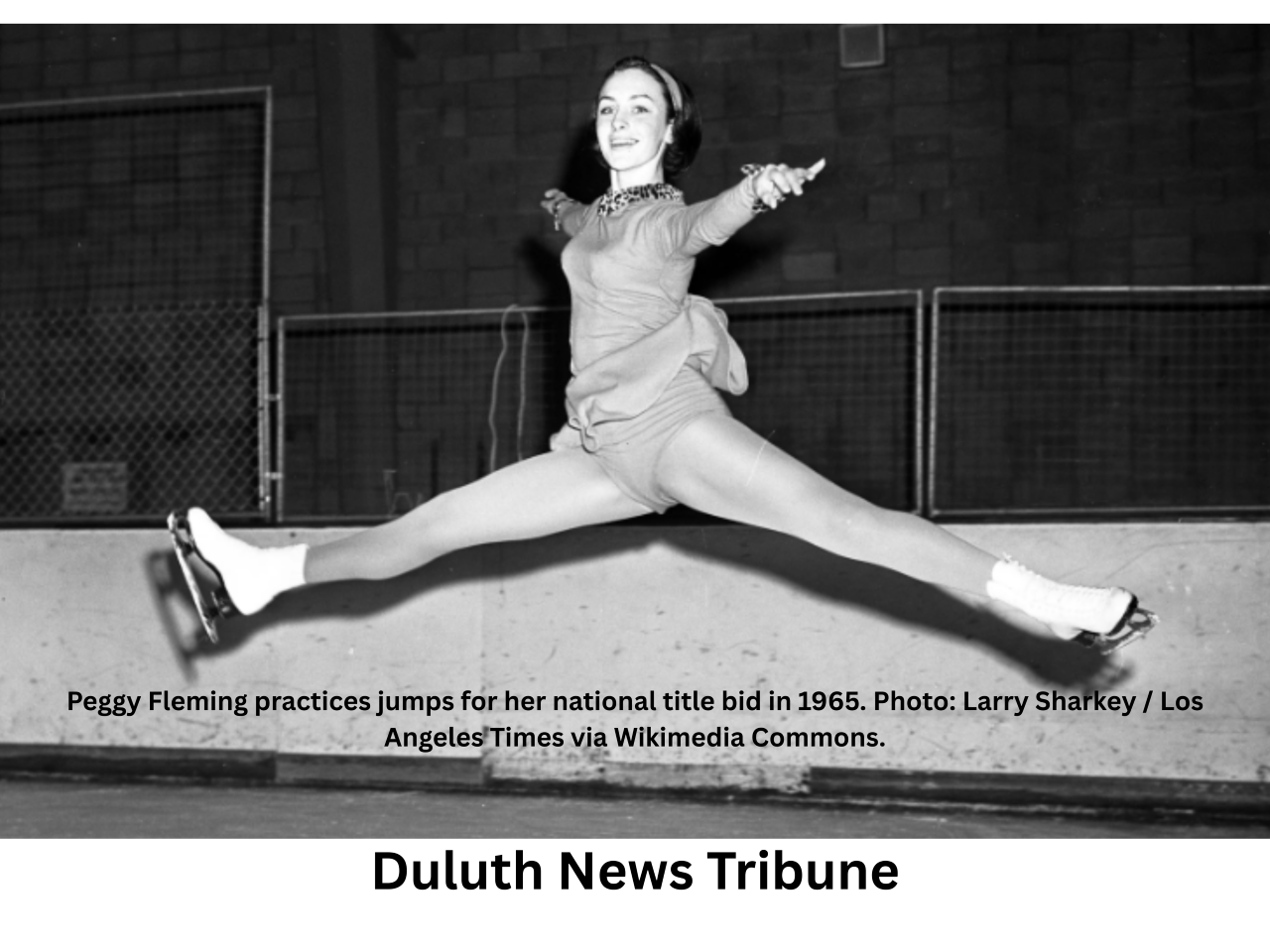
In 1968, watching Peggy Fleming win Olympic gold in color inspired me to dream big. The next year, my family built a backyard ice rink. While my brothers played hockey, I used it to practice figure skating, blasting music from my bedroom window to transform the bumpy ice into my imaginary Olympic spotlight.
Though I traded skating for cheerleading and eventually became an author, music remained my creative anchor. Just as it once guided my movements on the ice and the gymnasium floor, music now shapes my writing rhythm, allowing me to match a song’s emotional tone to deepen every story I tell.
On March 17, 2018, the Duluth News Tribune published an essay I wrote about those early days—about that little girl, her record player, and her father’s backyard rink. Not long after it ran, I opened my inbox and froze. Right there in the email preview, it read: From Peggy Fleming.
Greg Jenkins, Peggy’s husband, was writing to say they had both enjoyed the piece. I never imagined those honest words would actually reach her, yet the universe has a way of connecting people in ways that defy explanation. After a few polite exchanges, I chose to honor their privacy. As much as part of me wanted to become their new best friend, I accepted their kind note as a wonderful honor and left it at that.
Years later, with my instructional writing guide, Doris Writes. So Can You!, ready for publication, I figured future readers would look at the back cover before buying. That was my standard practice. So, to give the book its best chance, I followed a specific publishing strategy to secure distinct types of endorsements: a professional editor for literary credibility, and a prominent, recognizable name for mainstream appeal.
My first go-to was Chuck Frederick, editorial page editor of the Duluth News Tribune, and I was deeply honored by his glowing blurb complimenting my writing style. Since Peggy had loved my essay, she was the ultimate person to ask. I decided to reach out to my childhood hero and American icon, hoping she might endorse the heart of the book.
I rewrote my email countless times, keeping it respectful and free of pressure. With a deep breath, I hit send.
The response was immediate. After sharing sample chapters and explaining the heart behind my book—simply to help others find the courage to write their own stories—she provided an endorsement I could only have dreamed of.
While preparing this article, I asked Greg if there was a particular song Peggy loved to skate to during her career. He responded with, “Some Enchanted Evening,” by Jane Olivor.
Peggy performed to that song at the 1980 World Professional Figure Skating Championships, a routine remembered as one of the most breathtaking of her career. The velvety, soaring intensity of Olivor’s voice must have perfectly matched Peggy’s effortless, exquisite elegance—a performance that looked like art in motion.
I still remember the magic I felt skating to music as a child, even though my skills were far more imagined than real. Yet, it is the same beautiful truth: when the right melody takes over, it moves the performer with precision until the music and the movement become one.
More than fifty years after I first watched Peggy Fleming win gold, our paths crossed through the written word. The common thread was never skating or writing alone; it was the power of music to breathe life into both. When melody and passion collide, they create something greater than either could achieve alone. For one little girl on a backyard rink, that connection carried a dream across decades and brought it full circle in the most unexpected way.
Photo Gallery